
Why Pride?
Several months ago, someone asked me why we participate in Pride month and why isn’t there a heterosexual month? I appreciated their honesty and desire to understand. In these times, it is critical to continue to have dialogue about issues we might not understand or need to look at from another perspective.
Why Pride? (and more specifically, why Pride as followers of Jesus?)
As Christians, we value all life. It is not hyperbole to say that Pride has saved lives, not least of those LGBTQIA+ young people*. Seeing who you are, represented and celebrated, can change the trajectory of your life. “You are not alone” is a powerful message.
For many queer** individuals raised in or navigating Christian spaces, reconciling their faith with their identity can be a painful journey. Pride Month provides a crucial space to heal and grow for several reasons:
Many LGBTQ+ people have faced rejection, condemnation, and harmful theology from religious institutions. Pride offers a counter-narrative, affirming that they are fearfully and wonderfully made in the image of God.
Just as Jesus reached out to the marginalized, Pride Month provides a visible sanctuary where LGBTQ+ people can be their authentic selves without fear of judgment. For isolated individuals, visibility can be a literal lifesaver.
Lord of Life along with other progressive and affirming congregations use Pride to celebrate diversity as a beautiful reflection of God's creativity rather than a departure from it.
Why Isn't There a "Heterosexual Month"?
In a world where heterosexuality is the assumed standard, every month is essentially "straight pride" month. Heterosexual couples are universally celebrated, legally recognized, and culturally affirmed without needing to step outside societal norms.
Pride Month did not begin as a celebration of a preferred identity, but as a protest against criminalization, systemic violence, and social marginalization. Heterosexual individuals have never had to fight for the right to exist, marry, or hold hands in public safely.
What does this mean for us as followers of Jesus?
Within both secular and religious spaces, the concept of Pride is viewed differently. Some argue from a deeply traditional perspective that celebrating Pride is contrary to biblical teachings. Christian Scholars and other affirming churches like Lord of Life argue that celebrating Pride is a reflection of the radically inclusive, compassionate love that Jesus modeled.
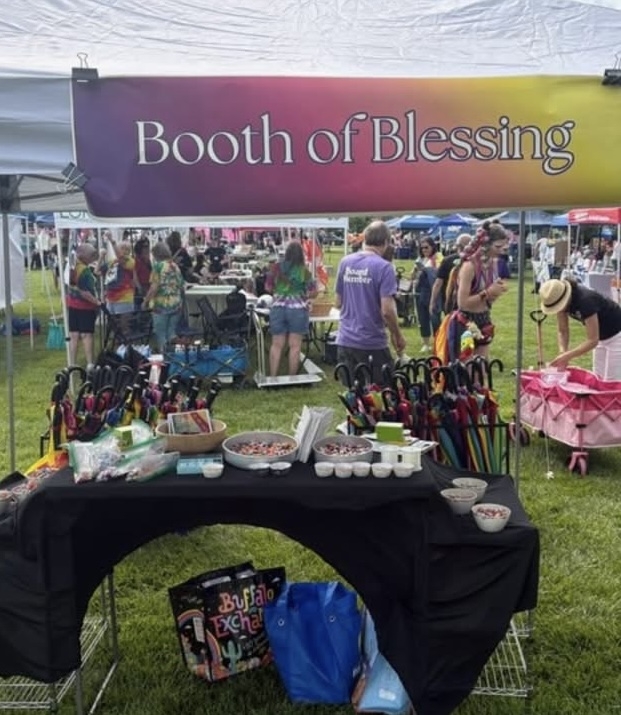
Ultimately, Pride Month challenges both the church and the broader culture to look at marginalized groups and choose visibility, safety, and grace over fear and discrimination. Each year, as we participate in Pride events, we hear comments like, “Wow, I didn’t know there were churches that accepted someone like me?” or “I don’t know if I could ever go to church again after the rejection from my church.”
We still have work to do to overcome the hate and hurt. How can we follow in the love and compassion that Jesus modeled for ALL people? Walk with us at Cincinnati Pride (https://www.lol-lutheran.com/announcements)? Put out a Pride flag or wear your LOL tie-dye or ‘Love over Hate’ shirt? For more Biblical understanding, read John Fugelsang’s chapter on “Thou shalt not hate gays” in “Separation of Church and Hate”.
Call out prejudice or harmful language? It’s not an easy road but one worth the time and the risk. Our LGBTQIA+ neighbors are counting on us.
Living, sharing and celebrating with you in God’s love for all people,
Angie Seiller, Director of Faith Formation
*LGBTQIA+ is an inclusive umbrella acronym used to describe diverse sexual orientations, gender identities, and biological sex characteristics. The letters stand for Lesbian, Gay, Bisexual, Transgender, Queer/Questioning, Intersex, and Asexual. The "+" sign represents all other marginalized identities and expressions within the community.
**Queer: Historically a derogatory term for gays, this word is now used positively by many lesbian, gay, bisexual, and transgender people and allies. It is sometimes used to describe an open, fluid sexual orientation and/or gender identity expression.