
Sunday Worship8, 9:30 and 11 am

They say “home is where the heart is”.
But I prefer the Ram Dass quote:
“We’re all just walking each other home”.
Home in this context
contains so many layers.
It can be a geographical place.
A house.
The town we grew up in.
The place we live now.
My yoga mat feels like home,
as does my campsite
at Assateague State Park
where I make a home every summer
for three weeks in my tent.
Home also lives inside of us.
Like when we stop showing up in the world
in ways that others want us to,
and finally figure out who we are
underneath all those layers of expectations.
When we finally come home to ourselves.
Home can also be a place of belonging.
Not where we edit ourselves to fit in,
to be included in some group
we aspire to be a part of.
But the place we can show up
as we are,
with the way we dress,
or wear our hair,
with our beliefs and paradigms
about the world,
and discover we are among others
who see us,
and love what they see.
When we spend time in that community,
we often say,
“I’m at home here”.
Home can also be the place
we’re headed to,
on the other side
of this human journey.
Or the place we came from,
before we inhabited human clothes.
Home… so many layers.
I also appreciate how Ram Dass
reminds me
that while we might be pilgrims
on the way,
others around us
are also on the way.
We do not walk alone.
“We are all just walking each other home.”
Some slide up next to us
for a season on our journey.
Others walk beside us for decades,
maybe co-creating a home with us,
as we also find our way
to the home within us.
In this season,
I’m walking many paths home.
Since Dec 2022 I’ve been
living in temporary shelters.
These beautiful spaces
offered me lovely way-stations.
Peaceful.
Quiet.
Necessary.
They’ve given me time:
~ To discern what will,
and will not be,
part of my life going forward.
~ To release assumptions
about my work,
community and relationships.
~ To grow into new gifts,
and practice familiar skills
in new ways.
I’ve discovered that my life emerging from the fire
needs a very different home
than the one that burned down.
Smaller.
More intimate.
Retreaty.
A place for solitude and contemplation.
More connected to nature,
allowing me to live as close to being outside
as I possibly can.
A shelter for my soul.
My work home has also been disrupted.
Having stepped back
from the non-profit I founded 11 years ago,
and between long term church calls,
I’m listening for what comes next.
This gracious faith community at Lord of Life
has welcomed me into temporary work.
What a delight to come alongside
you beautiful pilgrims during a Sabbath season.
You have welcomed my Sunday reflections…
on Sabbath,
and how Spirit grows fruit in us
that tastes like love, peace, kindness,
gentleness, patience, and generosity.
I find myself at home with you
as we gather for worship outside
beneath the sanctuary of the trees.
This Summer I stood next to one God’s pilgrims
as she lay in a hospital bed.
A former nurse,
now the patient,
realized her body, wracked by pain
would no longer shelter her soul.
“I’m ready to go home,”
she told her daughter,
peacefully confident
of the home she was heading towards.
Her daughter,
grieving,
respectful,
and trusting her mother’s wisdom,
sang her home,
as her mother’s presence left her body,
returning to the Love,
who had birthed her into this human realm.
Like Ram Dass says,
“We are walking each other home!”
And much to my surprise,
Spirit has led me into a new kind of “home” work.
I passed my realtor exam this Summer,
and now look forward to coming alongside others
as they traverse the sacred space
between leaving one home,
and searching for another.
“We’re all just walking each other home,”
Ram Dass said.
Indeed we are.
Who and what shelters you?
What home are you walking towards in this season?
Who’s walking with you?
Shalom,
Pastor Mary
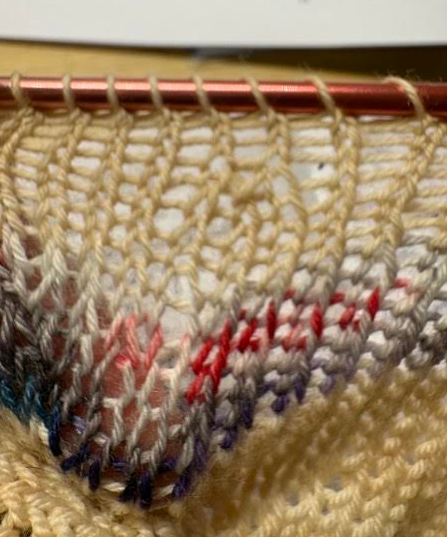
Knitting is complicated. I don't mean that it is difficult. You can pick up a pair of needles and some yarn and, with some basic instructions, make a simple swatch of knitted fabric. But sometimes things go wrong. You might poke your needles through at the wrong place and you're really not sure what you did or how to correct it. Or you set a project down and when you come back to it, you're not sure what stitches you have in front of you. Was that a purl row or a knit row? Are my stitches too loose? Too tight? Why are my fingers cramping?
An experienced knitter can often look and see exactly what has happened. To inexperienced knitters, or to people just admiring someone else's knitting, the loops coming together and looking smooth is something that seems to happen magically.
As I have stumbled through several knitting projects, I've thought about how similar knitting is to following Jesus. Some people are really good at it. Some people are just starting to take it on. For almost everyone, there is some level of mystery to it.
In knitting, one of the most frustrating things you can do is drop a stitch. If you don't catch it right away, that single missed loop can unravel all the way down your work. It feels disastrous. In our daily walk of faith, we drop stitches all the time. We lose our patience, we forget to love our neighbor, or we isolate ourselves when things get hard.
But here is the beautiful reality of God’s love: God is the Master Knitter, and God’s grace is boundless. When we make a mistake, God doesn't look at our dropped stitches, declare us ruined, and throw the whole project in the trash. Instead, with infinite patience, God meets us right where we unraveled. God gently picks up those loose loops and weaves them right back into the fabric of our lives. What we see as a glaring mistake, God is able to redeem and work into a beautiful, textured pattern.
Knitting also teaches us a profound lesson about the church. A skein of yarn is just a messy pile of string until it is intentionally looped together. A single, isolated stitch cannot keep anyone warm, but thousands of them holding onto one another can become a thick, comforting sweater or a blanket. When my own faith feels too loose or too tight, or when my hands are just too tired to keep going, I rely on the stitches right next to me to hold the tension. That is what we do for each other in community. We hold each other together when the world tries to pull us apart.
The beautiful mystery of knitting—and the mystery of following Jesus—is that we don't have to understand every complex technique to be wrapped in the final product. God's love covers us exactly as we are: imperfectly knitted, occasionally confused, yet deeply, profoundly cherished.
How can you be a stitch in community? What dropped stitches can you help to pick up?
Yours in the journey,
John
ASP Mission Trip to Knott County, Kentucky
July 12-18, 2026
“Let your hope make you glad. Be patient in time of trouble and never stop praying. Take care of God’s needy people and welcome strangers into your home.”
Romans 12:12-13
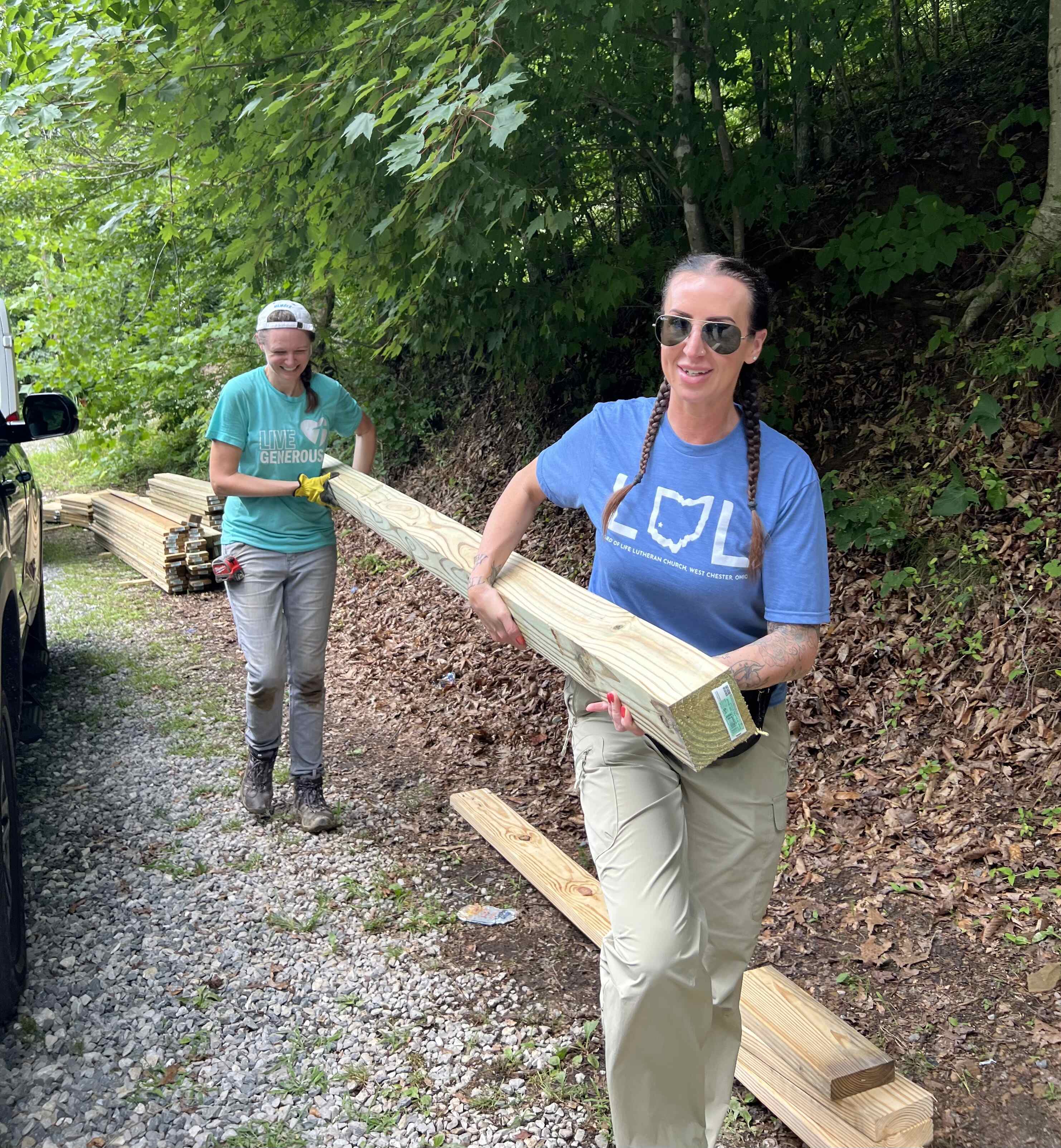
Our group of twenty-two members from Lord of Life Lutheran Church, West Chester, Ohio, received a great send-off from the congregation Sunday morning as we began the long-awaited annual mission trip to join the Appalachian Service Project (ASP), this time in Knott County, Kentucky. It was a joy to see many parents and their young adult children attending, and as the week progressed, working very diligently side by side. Some families have participated multiple times. And for some of our group it was their first time.
Listed below are LOL’s participants, followed by the number of years volunteering with ASP:
Larkyn 7
Tom (Father) 7, Megan (Daughter) 5
Rebecca (Mother) 6, Victoria (Daughter) 7
Michelle (Mother) 6, Lucas (Son) 6
*Lucas is now on ASP’s summer staff and working in Magoffin County, KY. On his day off, he drove here to join us!
Amanda 4
Angie 4
Danielle (Mother) 3, Zach (Son) 3, Brady (Son) 4
Kevin 3
Oscar (Father) 2, Liani (Daughter) 3
Brian (Father) 2, Jack (Son) 2
Patricia 2
Michael (Husband) 1, Maxine (Wife) 1
Andy (Father) 1, Emma (Daughter) 1
Thomas 1
Besides our LOL team, members from four other states participated in this week’s service projects, making a total of 80 volunteers:
United Methodist Church, Stratford, Connecticut
United Methodist Church, Columbus & Fall River, Wisconsin
United Methodist Church, Minnetonka, Minnesota
United Methodist Church, White Plains, North Carolina
This year, 10,000 ASP volunteers have served counties in five states:
Kentucky, Tennessee, West Virginia, Virginia and North Carolina,
Our housing was at Cordia School, Lotts Creek Community School. This was our meeting place, eating place and sleeping place. Each team was assigned a chore and these were rotated daily. Our daily routine consisted of early morning devotions and announcements, breakfast, leave for work site, eat a packed lunch on site, dinner back at the school, evening devotions, and review for the next day. At our evening meetings, songs were sung and fun games were played, as well as devotions.
At the first work site, everyone shared job duties which involved building a new handicapped ramp behind the trailer-sized home and staining the front ramp that was built last year. The couple living there had multiple health issues and they were so grateful for the help we provided. The second work site involved helping a family of four put some final touches on their home after flooding destroyed their previous home.
While chatting with one of our members Andy, he mentioned that this was his and his 14 year-old daughter's first time to volunteer with ASP. He talked about how nice it was to get acquainted with the host family and also how eye-opening it was to hear their story of the disastrous flood that resulted in their current situation. Just realizing the great needs of so many of the Appalachian people made him thankful for the opportunity to help.
It was truly a joy to be God’s hands and feet this week. We couldn’t have done it without all the support from planning teams, to leaders, to the wonderful generosity of Lord of Life.
Our team of volunteers would like to thank everyone for their prayers, support, encouragement, donations, and especially for their ice cream treats that we all enjoyed at the end of each busy work day!
Blessings,
Maxine Harris Havey
I settled into my usual spot
on the bench in the orchard.
I’d been coming here weekly
listening for the Wisdom of Creation.
This day in late Spring,
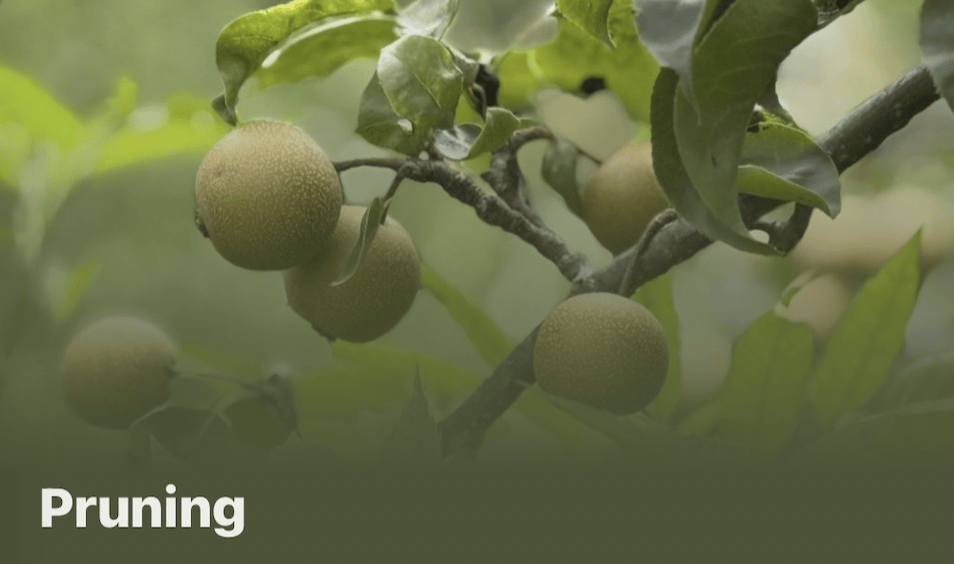
I noticed the peach tree
broken by the weight of too much fruit.
An entire limb
torn away from her trunk.
This Is what an unpruned life
looks like, I thought.
“This is what YOUR unpruned life
looks like,” Spirit confronted me.
Ouch.
The truth landed hard.
Many of the balls
I had been juggling
had begun falling from orbit.
I missed deadlines,
and double-booked myself.
Yes.
I was living an unpruned life.
The hard thing about pruning
is removing fruit very much alive….
pulling off three fruits
so the one left
can mature and ripen.
It feels brutal.
But as the peach tree instructed me,
an unpruned life
produces greater violence.
Thomas Merton’s speaks to
the violence of a busy life.
“To allow oneself to be carried away
by a multitude of conflicting concerns,
to surrender to too many demands,
to commit oneself to too many projects,
to want to help everyone in everything,
is to succumb to violence.
The frenzy of our activism
neutralizes our work for peace.
It destroys our own inner capacity for peace.
It destroys the fruitfulness of our own work,
because it kills the root of inner wisdom
which makes work fruitful.”
It took witnessing the violence
of the unpruned peach tree
to notice the cost
of my frenetic busyness:
the frustration of friends and colleagues
asked to reschedule time with me
because I had not kept track
of my commitments.
The impact of missing deadlines
on those waiting
to publish the newsletter,
or submit a grant proposal.
My unpruned life,
inflicted violence.
But what to prune?
“Notice what gives you life,
and what takes life from you,”
Spirit counseled.
Like the suckers growing
from the base of the tree,
these are the first things
to be pruned.
What sucked the energy
from my days?
I knew.
But pruning these would disappoint people.
So I had refrained.
The missing limb on the peach tree, though,
motivated me to release commitments
or look for new leaders.
After noticing what drained me,
Spirit invited me to notice
what made me come alive.
“Prune your life down to that,”
she counseled.
This felt more brutal.
Many of my commitments
did not make my heart sing,
but they blessed others.
“But do they bless you?”
Spirit persisted.
“Not always.
But so what?”
I pushed back.
“A faithful life
isn’t’ only about me.”
“When you spend your energy
keeping a lot of things going,
everything stays small,”
Spirit countered.
“Nothing grows into its fullness.”
You will not be able to attend to your work in the world
diluting your energy
on too many small things,
no matter how “good” they are.”
Frederik Beuchner’s words
came to mind.
“Dont ask what the world needs.
Ask what makes you come alive,
and go do it.
Because what the world needs
is people who have come alive”
Spirit challenged me
to get clear on my unique contribution.
To focus my energy there.
And to trust She would care for
what She pruned from my life.
Pruning removes all that’s not essential,
so the tree’s resources are available
to grow the most beautiful fruit.
Pruning uncomfortably grows us
into offering our best selves
to the world.
I’m grateful for the wisdom of the peach tree.
May I continue
to live into her lessons.
Shalom,
Pastor Mary Laymon

When Pastor Lowell asked me to help with a blog while he was away, I struggled with an idea at first. Then it occurred to me, our path at Lord of Life, and our experiences have a story to tell.
It's sometimes hard to describe the impact a place, a person, or experience has upon us. Lord of Life has been no different for me. Explaining the profoundness of our people, this place, my experiences, would be nothing short of impossible.
Having grown up in the Lutheran faith with family origins in the earliest Lutheran Church my childhood was filled with reminders of God's love for us. One particular constant memory is of the footprints in the sand story. A picture of this hung on the wall at my grandparents home, my aunts homes, and my home.
The footprints story is taken from many verses in the Bible. One is Isaiah 46:4: "Even to your old age and gray hairs I am he, I am he who will sustain you. I have made you and I will carry you; I will sustain you and I will rescue you". God's love always meets us where we are, carrying us when we need it.
As we explore Sabbath as a congregation, the visual of God carrying us, sustaining us, has allowed me thoughtful consideration. Time to consider how our faith family has woven into my life and the lives of my children. How it has carried me, sustained me.
In the nine years since I started attending; our congregation has met me as I am. It has held me in its arms, offered refuge, grieved alongside me, challenged me, provided a caring network of friends, supported the growth of my children in their faith, celebrated my love and provided deep joy and solace through worship.
Lord of Life, our community of love and acceptance makes me so proud. I'm so glad you're here with me on this journey. Proud to live, share and celebrate with each of you in this very special place.
May your experience of Sabbath in this season bring you peace.
Sarah Norman

As I sat staring at the waves rolling onto the beach last week, I couldn't help but think about how, even when we have the opportunity to slow down and "relax," the rest of life rarely does. The emails keep coming. Bills still need to be paid. Notifications buzz. Responsibilities wait for us when we return.
It made me wonder: What does it really take to reset? How long does it take to quiet our minds, reconnect with God, and find true peace? There doesn't seem to be a simple recipe.
"Let go and let God" is a common phrase, and for good reason. Yet if I'm being honest, I sometimes struggle with that. Turning off the "what if" thoughts isn't easy. Neither is replaying the interview answer you wish you'd given, the conversation you wish had gone differently, or the impatient response to your child's question. Even with strong faith, letting go can be hard.
Lord of Life has been a constant presence for most of my life, and while my relationship with this church has remained strong, it has also grown and changed. From "Bring a Friend Sunday" and junior high lock-ins to Sunday School lessons and Christmas Eve gatherings, the memories are vivid and meaningful. Through every season, this church has been a place where God continues to meet people exactly where they are.
As we sent Pastor Lowell and the Michelson family off to experience their own sabbatical, it reminded me that Sabbath is so much more than stepping away from the routine. It's about creating space to reconnect—with God, with ourselves, and with one another.
At the same time though, the work of ministry continues. We still needed an incredible team of VBS volunteers—and they showed up in amazing ways. We still need greeters, lay assistants, outdoor worship helpers, knitters, musicians, and countless others who quietly serve behind the scenes.
Perhaps that's part of the beauty of Sabbath. Life doesn't stop. The waves keep rolling in. The emails still arrive. The to-do list may still be waiting tomorrow. But Sabbath reminds us that our worth is not measured by our productivity, and that God remains at work even when we pause.
My prayer for all of us is that we find moments of Sabbath in this busy season—not necessarily by a formal sabbatical, but by making room for God's presence within our lives. Whether that's a quiet morning with coffee and Scripture, a walk in the neighborhood, worship with friends, or simply a few moments of stillness, may we be reminded that rest is not something we have to earn. It is a gift from God, offered to renew our hearts and draw us closer to Him.
Peace and rest be with you
Jillian Campbell
I’ve been researching my family history my whole life. I used microfilms at the library until I was in my twenties, and then ancestry web sites came along and information was way easier to access. Over the years, more information has been added to the online repositories. It started with a few decades of census records, and now city, county, and family histories, military records, vital records, church baptism and marriage records, and much more are all easy to search (for a fee).
I won’t bore you with the full millennium of genealogy I’ve managed to draw up, but when I go back about 250 years, I find several direct ancestors who not only fought in the American Revolution, but who also held titles from their original homes in England. They were among the original settlers who came to the American colonies based on the promises of opportunities and religious freedom, but were already mad they were being over-taxed by a government who used that money for things that didn’t benefit any of the people paying those taxes.
I’m really proud of my heritage. When I go to the symphony or a ball game, I’m the one singing the national anthem the loudest, and when people inevitably turn around to see where the giant voice is coming from, I’m always wiping tears and snot off my face. My love for this land is deep, woven into the very fabric of my identity and the stories of those who came before me.
As I reflect on the lives of those ancestors, I am reminded that patriotism has never been defined by silent, unconditional agreement. Those who founded this nation did so precisely because they believed that their primary duties—to their conscience, their families, and their God—required them to question the earthly powers of their day. For us as Lutherans, this tension is familiar. We are "simultaneously saint and sinner," living in the tension of being citizens of an earthly nation while our true home and highest loyalty belong to the Kingdom of God.
Our faith teaches us that while we honor our country, our primary guide for living must always be God’s radical, inclusive love. This love does not stop at borders and is not defined by legislative agendas. As Bishop Eaton has often reminded us, our civic engagement is not an act of partisanship, but a way to live into our baptismal covenant to serve all people and strive for justice and peace. When we use our voices in the public square, we do so not to serve a political platform, but to answer the biblical call to love our neighbor as ourselves—especially those who are most vulnerable or forgotten by human systems.
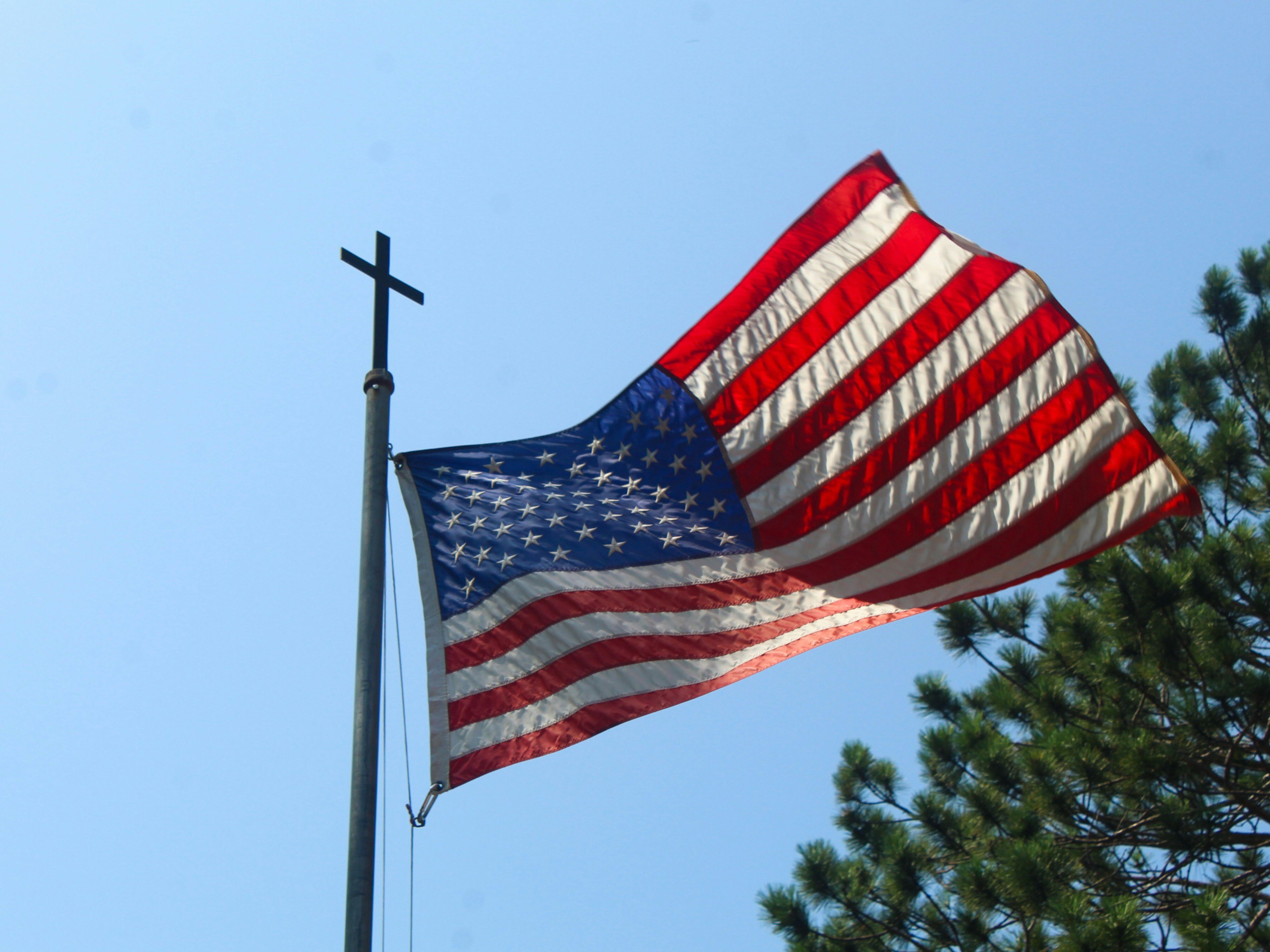
Allegiance to God often calls us to a path of holy discontent. It requires us to look at our world through the lens of the Gospel, asking whether our common life reflects the dignity God has granted to every human being. Loving our country means wanting the very best for all who reside within it, which sometimes means standing in opposition to specific paths taken by those in authority. Our patriotism is not diminished by our critique; rather, it is refined by our faith. We sing the anthem with pride, but we follow Christ with our lives, ensuring that no earthly flag ever eclipses the cross.
How does your faith play into your hopes for our country in the next 250 years?
Yours on the journey,
John Johns, Music Director